

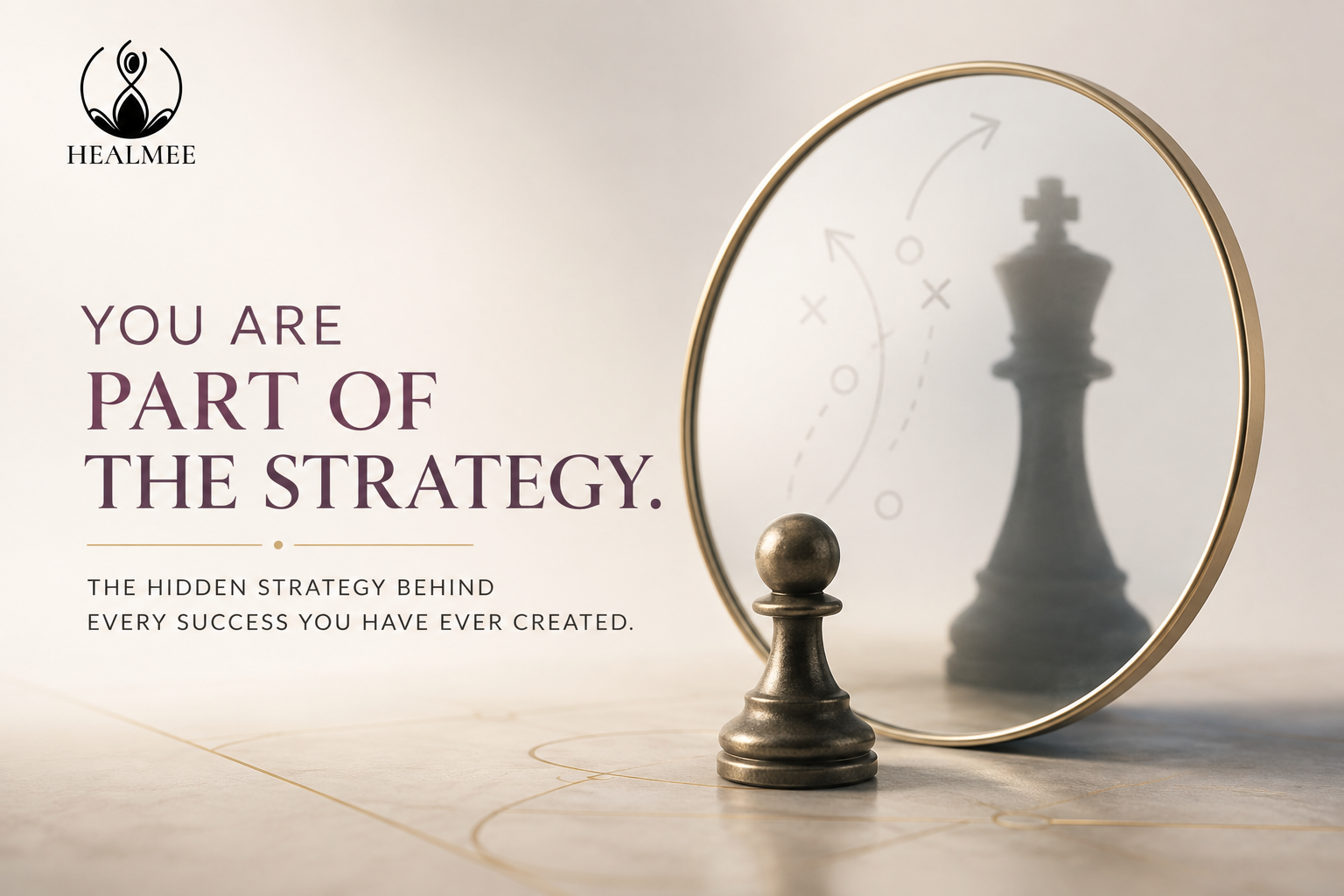
The hidden strategy behind every success you have ever created
We spend enormous amounts of time thinking about strategy.
Business strategy. Career strategy. Growth strategy. Financial strategy. Leadership strategy.
We plan, analyse, set goals and look for the right tools.
Yet there is one part of the strategy that rarely makes it onto the page.
You.
Not simply your qualifications or experience.
Your curiosity. Your willingness to learn. The way you respond when something doesn’t work. Your ability to adapt when circumstances change. The questions you ask. The risks you are willing to take. Even the beliefs you carry into the decisions you make.
Perhaps we have spent so much time looking for the right strategy outside ourselves that we have overlooked something fundamental about our success mindset:
You are part of the strategy.
And you always have been.
We Spend Years Building Strategies
Most of us understand success as something that requires a plan.
We identify where we want to go and then begin assembling what we believe will get us there.
Education.
Experience.
Connections.
Skills.
Processes.
Goals.
All of these matter.
However, two people can follow remarkably similar strategies and create very different outcomes.
Why?
Perhaps because a strategy is never executed in isolation.
There is always a human being carrying it.
One person encounters resistance and becomes curious.
Another encounters the same resistance and withdraws.
One questions what is no longer working.
Another continues because this is how it has always been done.
The plan may look identical on paper.
The person bringing it to life is not.
Your Success Mindset Is the Hidden Variable
This is where success mindset becomes much more than positive thinking.
Your success mindset influences what you notice, what you dismiss, what you attempt and what you avoid. It shapes how you respond to setbacks, learning, change and opportunity.
Affects whether feedback feels like information or criticism.
It shapes whether uncertainty creates curiosity or fear.
It influences whether a setback becomes evidence that you should stop—or information that helps you adjust.
Therefore, when we talk about strategy, perhaps we should ask more than:
Is this the right plan?
We might also ask:
Who am I while executing it?
Because the same opportunity can produce completely different results depending on the person meeting it.
The strategy matters.
But so does the consciousness, mindset and identity operating behind it.
Before You Had a Strategy, You Had a Way of Being
Think about something meaningful you have already created in your life.
Perhaps it was a career move, a business, a qualification, a relationship or simply finding your way through a difficult period.
Long before you had the perfect plan, there was probably something within you that kept moving.
Maybe you were curious.
Or you kept learning.
Maybe you asked for help.
Or you experimented until something worked.
Maybe you recovered quickly when it didn’t.
We often remember the visible milestones of success and forget the invisible qualities that created them.
The promotion is visible. Persistence isn’t.
The business is visible. Adaptability isn’t.
The achievement is visible. The hundreds of internal decisions behind it aren’t.
Yet those invisible qualities may have been among the most important parts of your strategy.
Success Can Make You Forget What Created It
Here lies an interesting human contradiction.
For generations, humanity has progressed because we kept growth-mindset, learning, adapting and building on what came before us.
Yet individually, once something begins working, we can become attached to the method that produced it.
Experience can quietly become certainty.
Certainty can become resistance.
And success can sometimes make us less curious about what else is possible.
This matters particularly now.
Technology is changing. AI is reshaping how many of us work. Careers are evolving. Entire industries are reconsidering how value will be created.
Curiosity, adaptability and lifelong learning are becoming increasingly important in the evolving workplace.
In such an environment, our previous success remains valuable—but it cannot become an instruction manual we are afraid to question.
After all, perhaps the greatest asset your previous success gave you wasn’t the formula that worked.
It was the person you became while discovering it.
The person who could learn.
Adapt.
Question.
Recover.
Create.
That person is still part of the strategy.
The Strategy You Need Next May Already Be Inside You
When circumstances change, our instinct is often to look outward.
What new skill do I need?
Which technology should I learn?
What strategy should I follow?
Those are useful questions.
But perhaps another question deserves equal attention:
Perhaps this is the part of a success mindset we overlook most easily: the person behind the achievement.
Maybe your next level doesn’t require abandoning everything you know.
Perhaps it requires reconnecting with the curiosity that helped you acquire that knowledge in the first place.
Perhaps it is your adaptability.
Your willingness to question yourself.
And ability to see possibility before certainty arrives.
Your courage to move without having every answer.
In other words, the hidden strategy behind your next success may not be something entirely new that you need to find.
It may be something within you that success made easier to overlook.
And this is why I don’t see success as a destination.
Every achievement gives us more experience, perspective and possibility from which to continue.
The strategy evolves.
The world evolves.
And we must allow ourselves to evolve with it.
Pause and Reflect
Think about the successes you have already created.
Beyond the plans, qualifications, titles and circumstances:
Who were you while creating them?
What qualities within you made those strategies work?
And are those qualities still active today—or have they become hidden beneath everything you have since achieved?
Because perhaps the most powerful success mindset begins with remembering one thing:
You were never standing outside the strategy.
You were part of it all along.

Give a Reply